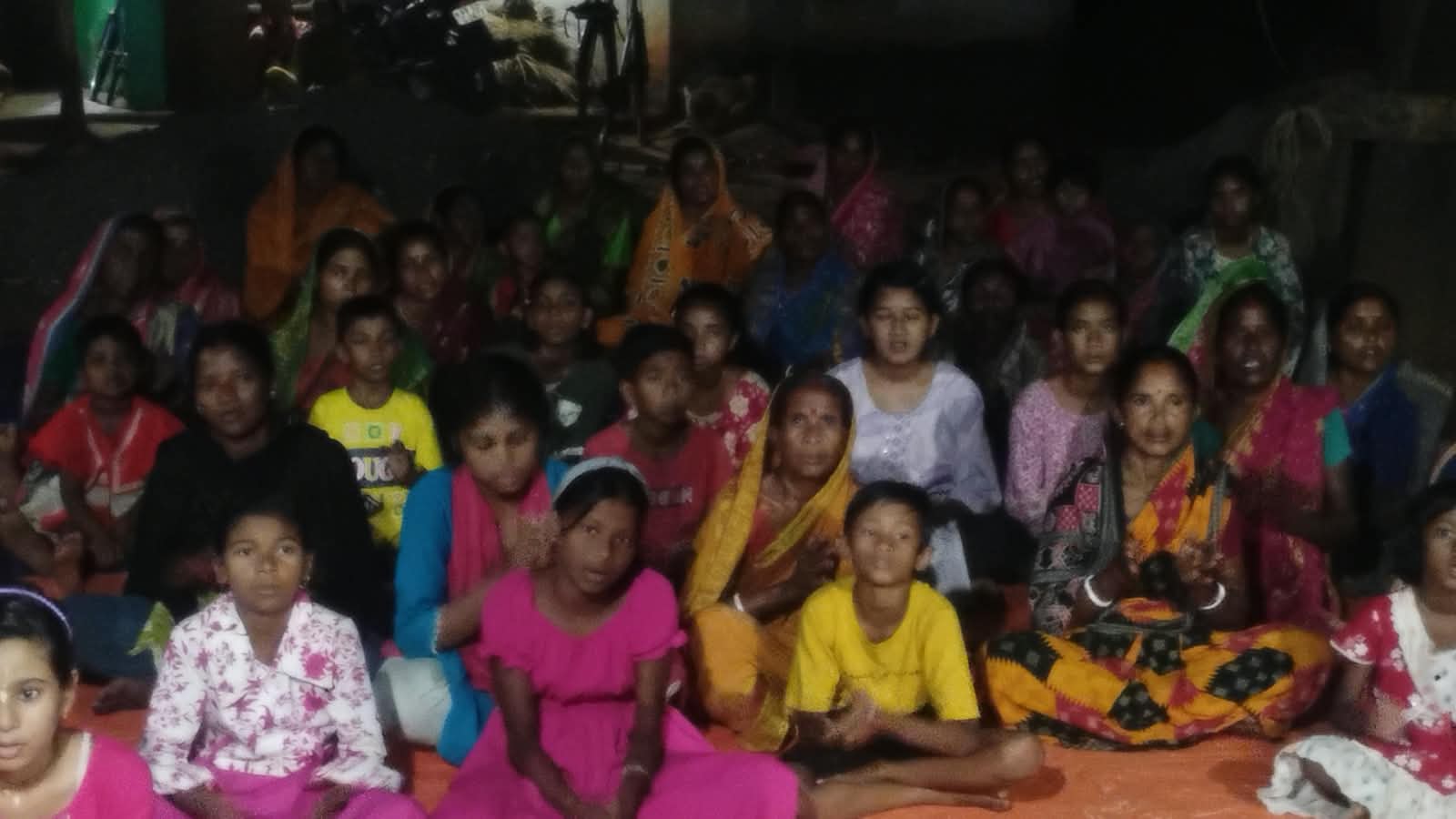
Harinam Sankirtan at Arsha Hari Mandir
A Harinam sankirtan was held at Arsha Hari Mandir, reported from the field on 16 October 2026. The report states it in a single line — a Harinaam Sankirtan at the Hari Mandir in Arsha — and the photograph of the gathering accompanies it.
The simplest programme there is
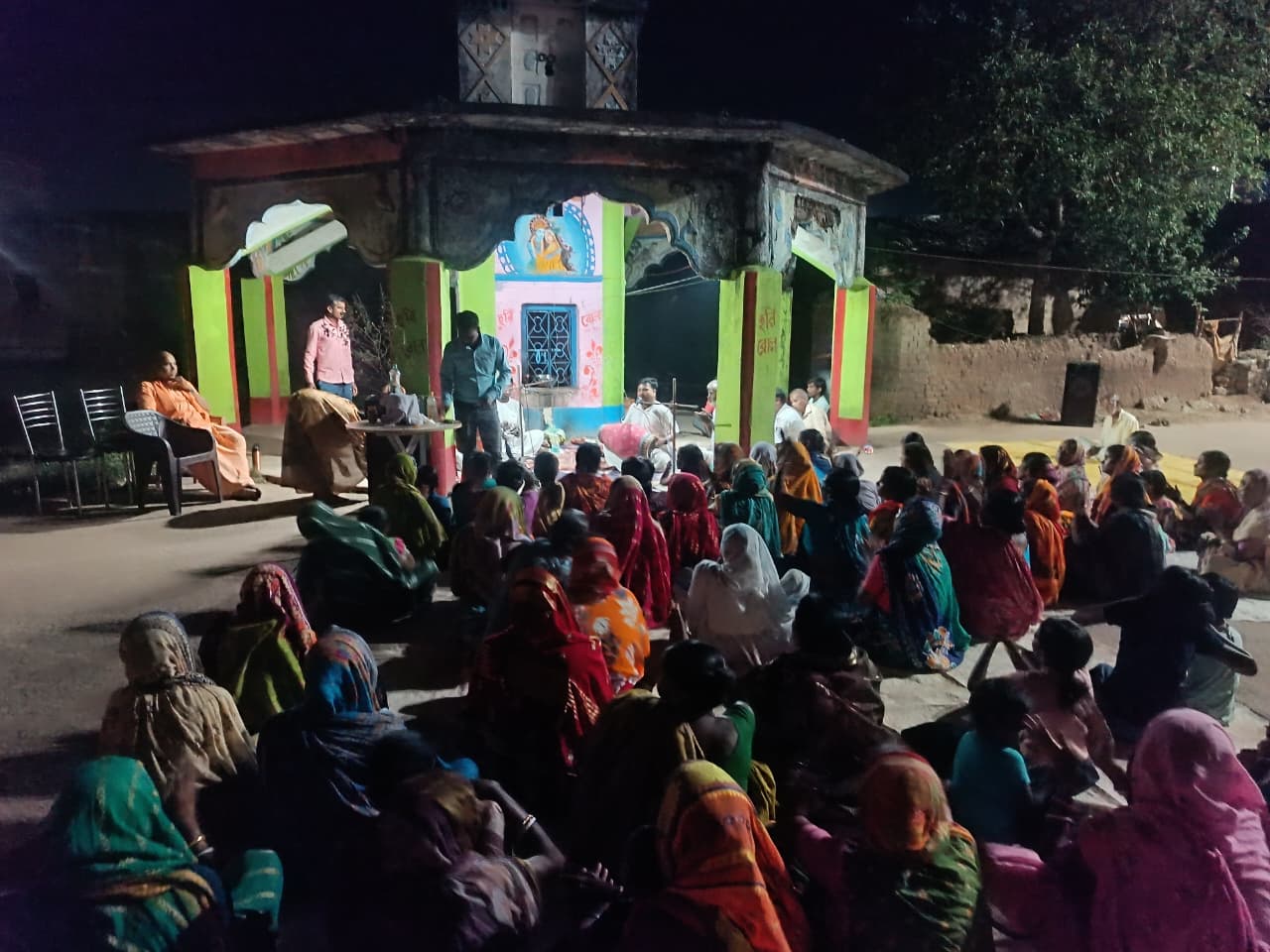
Harinam is the most portable form of devotional gathering. It needs no hall, no seating plan and no printed material. A group begins to sing, the lanes around the temple hear it, and the gathering grows as it moves.
There is no audience and no stage in a sankirtan — only participants. That is precisely why it works in places where a lecture would not: nobody has to be literate, nobody has to be seated, and nobody has to be introduced.
What sankirtan asks of a village
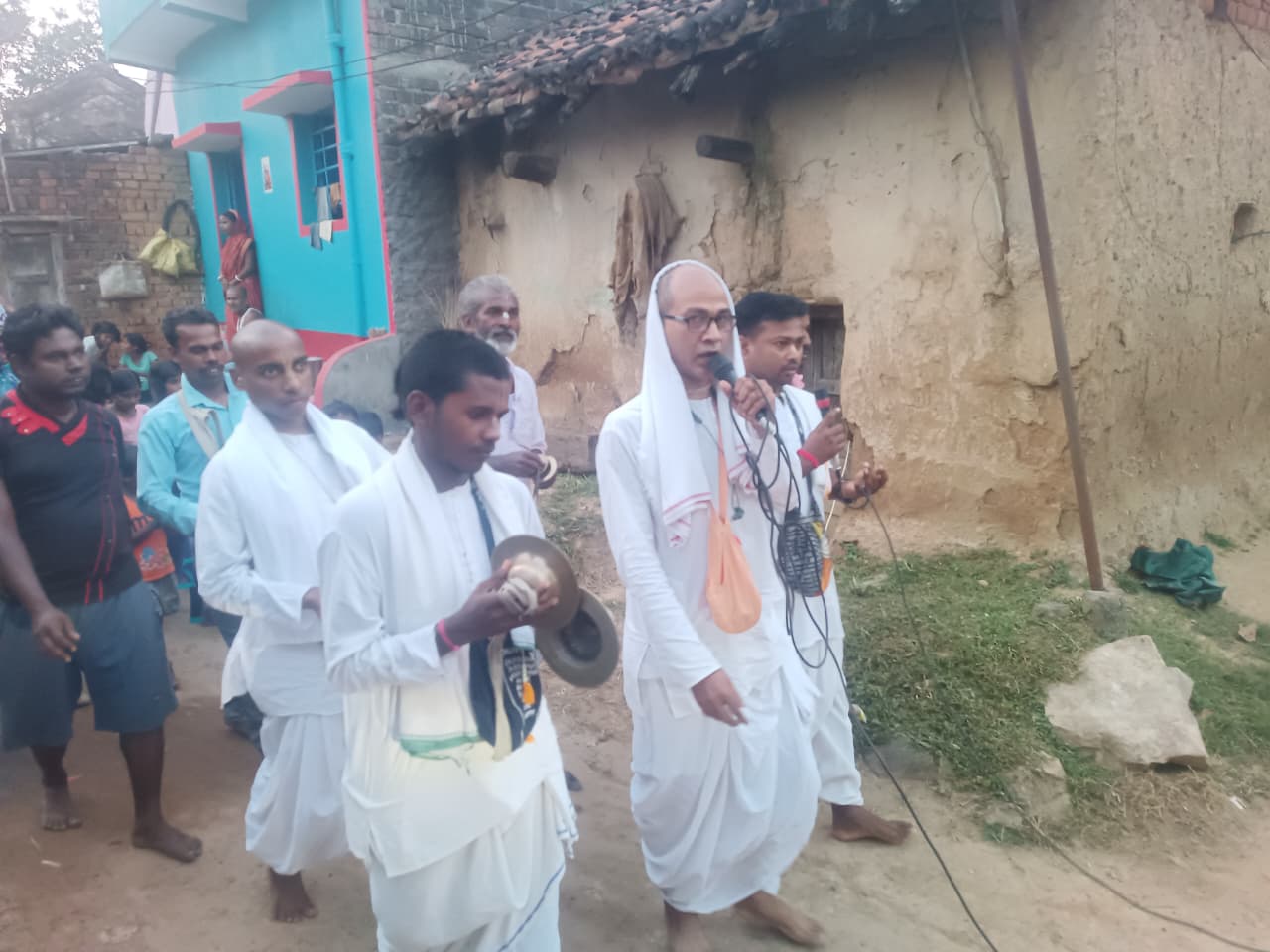
The form is deliberately undemanding: a melody simple enough to pick up by ear, a text that repeats, and no requirement to arrive at a particular time or stay for the whole round. That is part of why the holy name travels well in rural Bengal, where time is governed by work rather than by a clock.
It also lowers the barrier for the people who are usually left out. In a sankirtan the elderly can sit and sing, and children who cannot yet read can still carry the tune. Nothing about the form excludes them, so nothing has to be arranged to include them.
A temple as local institution
A Hari Mandir in a village is more than a building. It is the place where the calendar is kept — festivals, fasting days, the seasons of the devotional year — and where a family that has moved away knows it can return and find its place.
Temple-based programmes also tie a practice to a fixed point. Families who already visit the mandir have a reason to stay longer, and families who rarely come have a reason to return.
How word travels
In a settlement of this size a notice board is neither present nor needed. Word about a programme travels through the temple, the market and the school gate, which is why a local gathering needs no publicity and an outside event does. The scale is smaller, and the staying power is larger.
How the singing is led
A sankirtan is call and response: one voice gives a line, the gathering answers it, and the same exchange repeats while the pace builds. Because the answer is short and repeats, a person who arrives late can join on the second round without knowing the tune beforehand. That is the mechanism behind the openness, and it is why the form needs no rehearsal.
What a village temple is used for
A mandir in a village is used for more than worship: daily offerings in the morning and evening, the festivals that fix the year, and, on ordinary days, a place to sit out of the rain. A programme held there borrows that standing rather than having to create it, which is why the same building can carry a scripture class, a kirtan and a village meeting without any of them looking out of place.
Cultural care as part of the whole
The Trust's published programmes are Educational Care, Health Care, Cultural Care, Social Care, Empowerment and the Free Meal & Prasadam Distribution programme, in Jharkhand, West Bengal, Assam and Tripura. A sankirtan at a village temple sits in the cultural strand, beside education, health and social care rather than outside them.
That strand is fragile in the usual way. A temple that falls out of use begins to decay, and a devotional tradition that is not practised by young people in their own language is one that eventually has to be performed rather than lived.
What comes next
The Arsha programme was reported from the field on 16 October 2026. In form it is the kind of gathering that repeats itself: the same courtyard, the same temple, the same holy name.
If you would like to support cultural care in the districts where the Trust works, visit the donation page.